About Me

My photo
just because i fancy writing; just because i need my space; just because i want to share ...

Saturday, April 14, 2018

Peribahasa Tingkatan 1,2,3


Aidan dok pening kepala.... why the peribahasa so susah, ma?

AbgDan, 
belajarlah... biar putih tulang, jangan putih mata. Bila dah jadi ahlinya, pasti indah kau rasakan bahasa ibunda ini... hanya jauhari yang mengenal manikam...

belajarlah... sebab di mana ada kemahuan, di situ ada jalan..orang kata, sehari selembar benang, lama-lama jadi kain... kalau tak dipecahkan ruyung, manakan dapat sagunya..

belajarlah... usaha bersungguh-sungguh.. alang-alang menyeluk pekasam, biar sampai ke pangkal lengan; genggam bara api, biar sampai jadi arang!

insyaallah..niat nak belajar lillahitaala... tak ada yang susah!


Thursday, April 12, 2018

Biology Form 1: Cell Respiration

Alang-alang study ngan Aidan last week on this topic, thought of putting this up for sharing, if its help. Info extracted from Wikipedia.


•Cellular respiration is the process of breaking sugar into a form that the cell can use as energy. This happens in all forms of life. Cellular respiration takes in food and uses it to create ATP (Adenosine triphosphate), a chemical which the cell uses for energy.

•Usually, this process uses oxygen, and is called aerobic respiration.
•It has four stages known as glycolysis, Link reaction, the Krebs cycle, and the electron transport chain. This produces ATP which supplies the energy that cells need to do work.
•When they don't get enough oxygen, the cells use anaerobic respiration, which doesn’t require oxygen. However, this process produces lactic acid, and is not as efficient as when oxygen is used.
•Aerobic respiration, produces much more energy and doesn’t produce lactic acid. It also produces carbon dioxide as a waste product, which then enters the circulatory system. The carbon dioxide is taken to the lungs, where it is exchanged for oxygen.
  The simplified formula for aerobic cellular respiration is:
  C6H12O6 + 6O2 → 6CO2 + 6H2O + Energy (as ATP)
  The word equation for this is:
  Glucose (sugar) + Oxygen → Carbon dioxide + Water + Energy (as ATP)
•Aerobic cellular respiration has four stages. Each is important, and could not happen without the one before it. The steps of aerobic cellular respiration are:
–Glycolysis (the break down of glucose)

Glycolysis
•In glycolysis, glucose in the cytoplasm is broken into two molecules of pyruvate. Ten enzymes are needed for the ten intermediate compounds in this process.
•Two energy-rich ATP kick-start the process.
•At the end are two pyruvate molecules, plus
•Four molecules of ATP are made and two NADH molecules. Both types are energy-rich and used in other cell reactions.
•In cells which use oxygen, the pyruvate is used in a second process, the Krebs cycle, which produces more ATP molecules.
•Biology textbooks often state that 38 ATP molecules can be made per oxidised glucose molecule during cellular respiration (two from glycolysis, two from the Krebs cycle, and about 34 from the electron transport chain).[1] However, this maximum yield is never quite reached, mainly because of losses through leaky membranes. Estimates are 29 to 30 ATP per glucose.[1]
•Aerobic metabolism is about 15 times more efficient than anaerobic metabolism. Anaerobic metabolism yields 2 mol ATP per 1 mol glucose. They share the initial pathway of glycolysis but aerobic metabolism continues with the Krebs cycle and oxidative phosphorylation. The post glycolytic reactions take place in the mitochondria in eukaryotic cells, and in the cytoplasm in prokaryotic cells.

 Link reaction
Pyruvate from glycolysis is actively pumped into mitochondria. One carbon dioxide molecule and one hydrogen molecule are removed from the pyruvate (called oxidative decarboxylation) to produce an acetyl group, which joins to an enzyme called CoA to form acetyl CoA. This is essential for the Krebs cycle

Krebs cycle.
Acetyl CoA joins with oxaloacetate to form a compound with six carbon atoms. This is the first step in the ever-repeating Krebs cycle. Because two acetyl-CoA molecules are produced from each glucose molecule, two cycles are required per glucose molecule. Therefore, at the end of two cycles, the products are: two ATP, six NADH, two FADH, and four CO2. The ATP is a molecule which carries energy in chemical form to be used in other cell processes.

Electron transport chain
This is where most of the ATP is made. All of the hydrogen molecules which have been removed in the steps before (Krebs cycle, Link reaction) are pumped inside the mitochondria using energy that electrons release. Eventually, the electrons powering the pumping of hydrogen into the mitochondria mix with some hydrogen and oxygen to form water and the hydrogen molecules stop being pumped.
Eventually, the hydrogen flows back into the cytoplasm of the mitochondria through protein channels. As the hydrogen flows, ATP is made from ADP and phosphate ions.
•Anaerobic respiration is a form of respiration which does not use oxygen. Elements other than oxygen are used for electron transport. Common replacements for oxygen are nitrates, iron, manganese, sulfates, sulfur, fumaric acid and carbon dioxide. Escherichia coli uses nitrates and fumaric acid for respiration.
•For the electron transport chain to work, there must be a final electron acceptor at the end of the chain.[1]This allows electrons to pass through the chain. In aerobic organisms, this final electron acceptor is oxygen. Molecular oxygen is a highly oxidizing agent and so it is an excellent acceptor. In anaerobes, other less-oxidizing substances such as sulphate (SO42−), nitrate (NO3−), sulphur (S) are used. These terminal electron acceptors have smaller reduction potentials than O2, so less energy is released per oxidized molecule.[2]Anaerobic respiration is therefore less efficient than aerobic respiration except, of course, when oxygen pressure is low.
•If oxygen is not used at all, the process is called fermentation. Examples of organisms using fermentation are lactic acid bacteria, and yeast. Yeast is a fungi, not bacteria.
  The equation for anaerobic respiration is:
  C6H12O6 -> 2C3H6O3 
  in word equation: glucose -> lactic acid

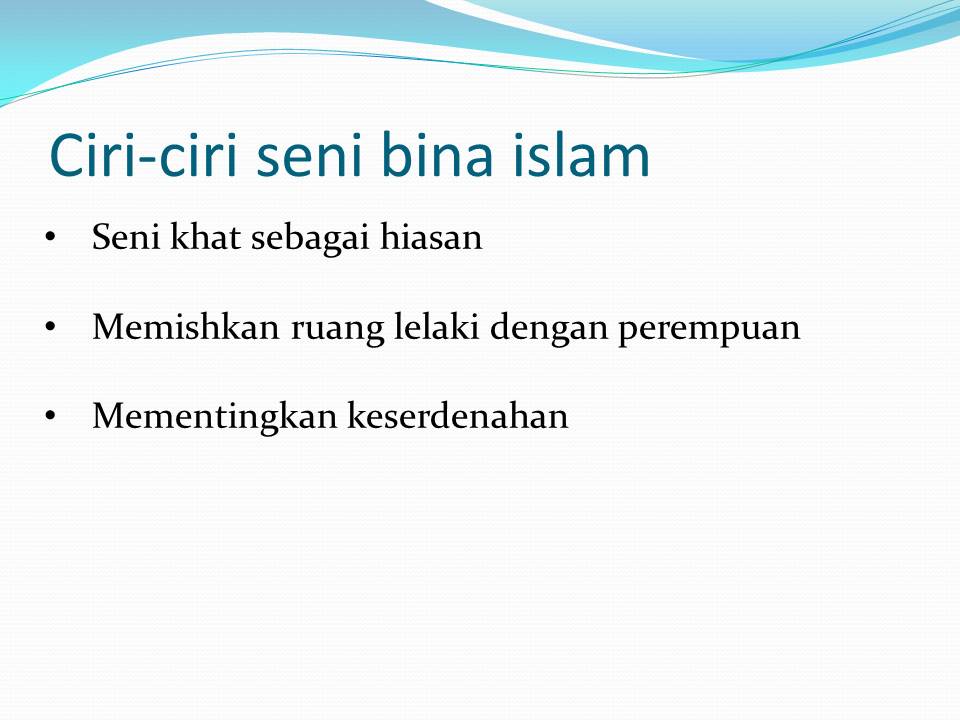
Sejarah Thn 5: Kesenian Islam

Prepared by Aimar for his mid-term project assessment


Wednesday, March 7, 2018

Projek RBT : Taman Mini

Two weeks ago, Ustaz Syidi bagi assignment kat anak untuk projek RBT. Tahun ni, diorang kena buat taman mini dan buat observation on the growth of the tanaman. 

Mama dah panik dah, sebab kalau bab gardening ni, I'm not a green thumb sejak lahir lagi. So, nak assist Aimar in his project would be a challange for both mama & anak. 

Alhamdullillah, we've pulled through. 

Aimar seorang anak aktif yang memang nak dapat fast result and susah nak focus on certain things for a long period. But looking at his progress doing background research on what to buy, where to buy, how to prepare and how to take care of the plants, I'm so impressed. Tambah impress when he took care of the taman himself, without me reminding him on daily basis to get the measurement for the daily observations and to water the plants. He followed routine and I am so proud of him. 

As I looked at his result on the measurement he took, I have an idea to practice what was thought in Science. So I've given him extra assignment for his benefits to apply the Kemahiran Proses Sains (details on KPS) and also asking him to use the Power Point so that he can apply his TMK knowledge too... And of course, I took advantage in asking him to get more info on the Proses Hidup Tumbuhan. 

The report and Kemahiran Proses Sains is still in progress. Wish to update it accordingly. 

Here's the current update as he had done for the submission to RBT. Credits to Ustaz Syidi for being able to instill minat dan kesungguhan Aimar to work on on this religiously. 


The link for the power point presentation by Aimar


gigih dia google gambar pokok, nak tahu nama pokok :)


(ok, note to mama: mama nak kene ajar guna BM yang betul, boleh latih bina ayat)


Kemahiran Proses Sains: Mengukur & Mengelas 
(asked him what he meant by 'yang paling panjang', so he explained, untuk Aloe Vera dia ukur daun paling panjang and paling pendek to see the progress.)

Kemahiran Proses Sains: Mengukur & Mengelas 
Lepas ni boleh ajar dia nak interpret data, kira average and buat graph. 

Kemahiran Proses Sains: Mengukur & Mengelas
Baru perasan dia tak tulis unit. Nanti nak kena inform dia. 


Kemahiran Proses Sains: Memerhati & Mengukur menggunakan nombor

Untuk pokok B, dia kira total number of bunga on daily basis. And also ada extra observation that he put in this note. 

Ok, banyak lagi info practical that can be extracted on this mini project and will go through with him step by step. Things like, meramal & membuat inferens, mengunakan ruang & masa (graphic representation), mentafsir data, membuat hipotesis dan kesimpulan. 
Also, will need to go through with him that the report he's doing, the video he loaded in the YouTube is part of communication in Kemahiran Proses Sains. 
KBAT: Nak suruh dia pikir how can he define the operation about the pembolehubah & the concept from his experience and observation.

Also, preparing his understanding on Proses Hidup Tumbuhan, I asked him to tell me more about the science of tumbuhan... dia copy paste from the internet. (TQ sir for the great simplified info) 


So, KIV this one and hope can work on it with Aimar, Insyaallah.